
The Moon has been orbiting Earth for billions of years. But what would happen if, one day, it simply vanished? This impossible scenario would trigger catastrophic consequences for the planet, the climate, and life as we know it.
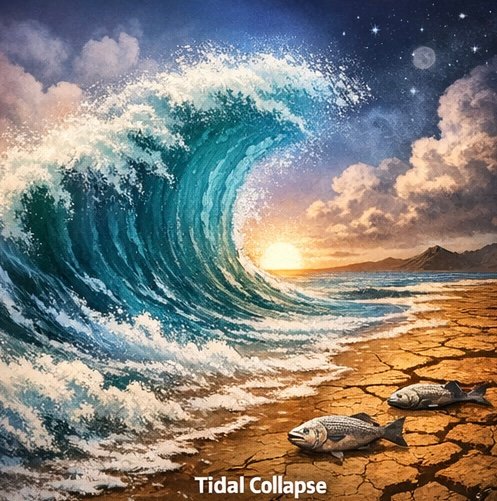
🌊 The Collapse of Ocean Tides
The Moon is the primary force behind Earth’s tides. Its gravitational pull creates the rhythmic rise and fall of the oceans that regulate marine life. Without the Moon, tides would become extremely weak and chaotic.
Coastal ecosystems would collapse, countless marine species would disappear, and ocean currents would be permanently altered.
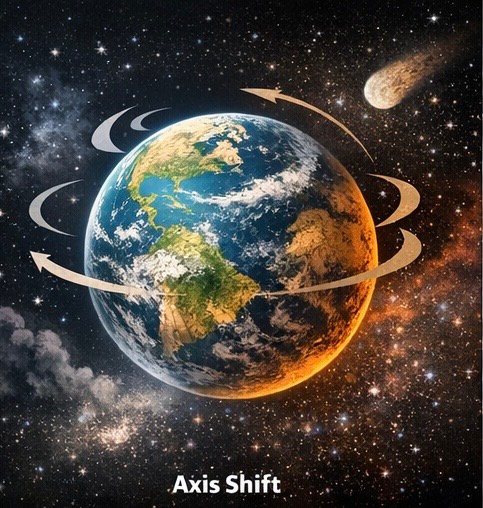
🌍 Earth Would Lose Its Stability
The Moon plays a crucial role in stabilizing Earth’s axial tilt. Without its gravitational influence, the planet would begin to wobble unpredictably.
These instabilities would cause extreme seasonal shifts, leading to scorching summers and sudden ice ages across different regions of the world.
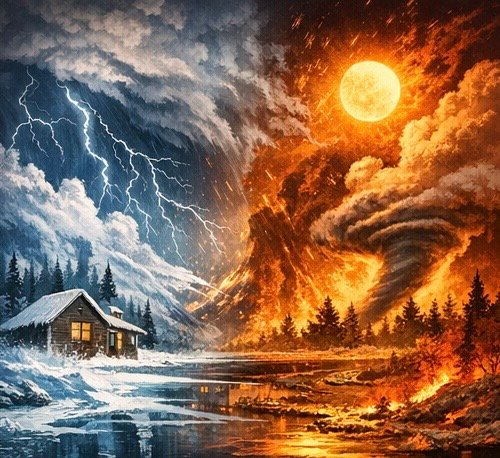
🌪️ Extreme Climate Changes
Earth’s climate would become far more unstable. Storms would grow stronger, hurricanes would become more unpredictable, and long-lasting droughts would increase.
Some parts of the planet could freeze permanently, while others might experience unbearable heat year-round.
🧬 The Impact on Life and Evolution
Many species rely on lunar cycles to reproduce and survive. Without the Moon, thousands of species would go extinct, disrupting the entire food chain.
Life on Earth would evolve along a completely different path, dramatically reducing global biodiversity.
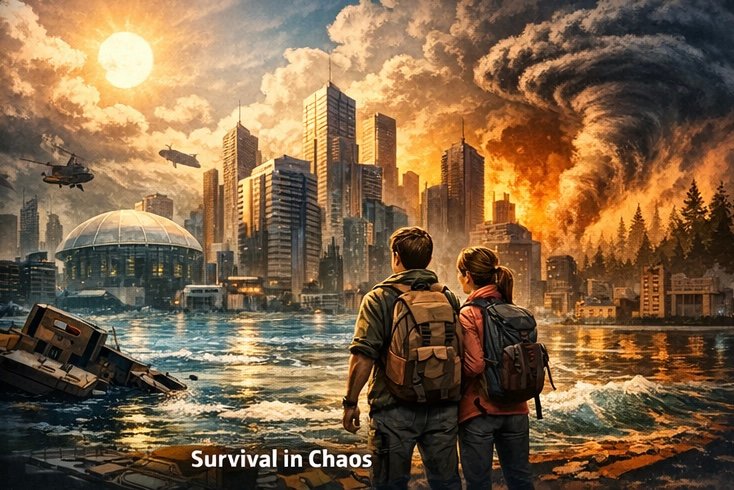
🌌 Could Humanity Survive?
Humans would face unpredictable flooding, extreme climate instability, and severe shortages of food and resources.
Survival might be possible, but civilization would be forced to adapt to a planet that no longer behaves as it once did.
🔮 Conclusion
The sudden disappearance of the Moon would not be just an astronomical event, but a global catastrophe. This thought experiment highlights how fragile Earth’s balance truly is and how a single change can reshape everything.